

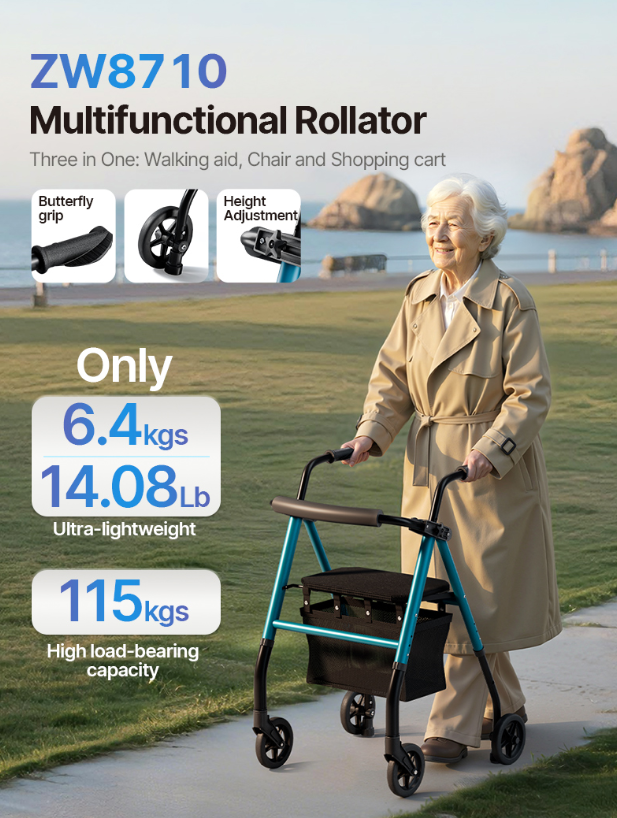
Curious what is a rollator walker? This concise guide covers features, benefits, and tips to choose the right mobility aid for independence.
A rollator walker is a sophisticated mobility aid designed for individuals who require walking support but wish to maintain an active pace. It thoughtfully combines the stability of a traditional walker with the smooth convenience of wheels, offering a unique blend of safety and freedom.
For those who find a standard walker cumbersome—requiring a lift-and-move action with every step—a rollator offers a significant advancement. Unlike its traditional counterpart, a rollator glides effortlessly, promoting a more natural and fluid walking pattern. This design allows users to move more quickly and with greater confidence.
It serves as an ideal solution for individuals who need more support than a cane can provide but do not require the full, static stability of a standard walker. A rollator is best suited for those who can support their own weight but need assistance with balance, endurance, or strength, particularly over longer distances.
The Core Design Philosophy
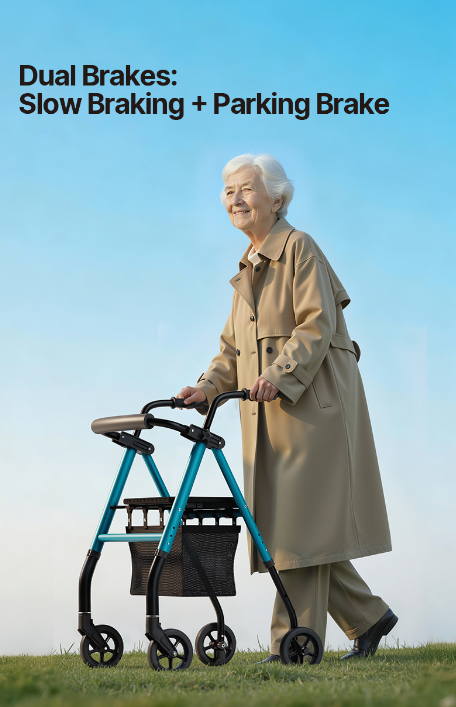
The fundamental concept behind a rollator is to provide continuous support without interrupting the user’s stride. This simple yet powerful principle is what distinguishes it from other walking aids.
At its core, a rollator is an exceptionally user-friendly piece of medical equipment. To better understand its benefits, let’s examine the key components found on nearly every model.
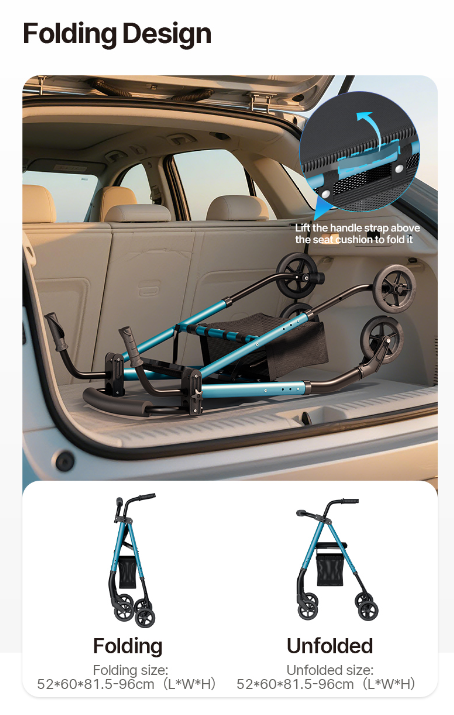
Anatomy of a Rollator Walker: Key Components
|
Component |
Primary Function |
Educational Benefit |
| Wheeled Frame | Provides a rolling base of support, typically with three or four wheels. | Eliminates the need to lift the device, reducing physical strain and enabling a smooth, continuous walking pace. |
| Hand Brakes | Function like bicycle brakes, allowing the user to control speed and lock the wheels. | Offers complete control over movement and allows the user to securely lock the rollator before sitting, preventing accidental rolling. |
| Built-In Seat | A sturdy, integrated seat, often accompanied by a backrest. | Provides a convenient and secure place to rest, helping manage fatigue and making longer excursions more feasible. |
| Storage Options | A basket, pouch, or under-seat bag for personal items. | Frees the user’s hands for safe steering and allows for easy transport of essentials like a purse, groceries, or medical supplies. |
This intelligent combination of features has established the rollator as an empowering and popular mobility tool. Its design reflects a modern understanding that mobility aids should enhance an active, independent lifestyle rather than restrict it.
This shift is also evident in market data. The global rollator walker market was recently valued at USD 80.63 million, with demand growing as more people seek effective ways to maintain their mobility and independence. For those interested in market dynamics, you can discover more about these market trends and their drivers in the full report.
Comfort and Convenience Features
Modern rollators are equipped with numerous features designed to improve the user’s quality of life. The built-in seat is perhaps the most appreciated feature, offering a convenient place to rest anytime, which can turn a challenging trip into a manageable one. It is important to check the seat’s height and width to ensure a comfortable fit.
Storage is another significant feature. Most rollators include a basket or a detachable pouch, typically located under the seat or on the front of the frame. This practical addition frees up the user’s hands, allowing them to safely steer while carrying groceries, a purse, or other personal items. As you compare models, you can learn more about ultralight rollators that successfully integrate all these features into a highly portable design.
Choosing Your Mobility Partner: Rollator vs. Other Aids
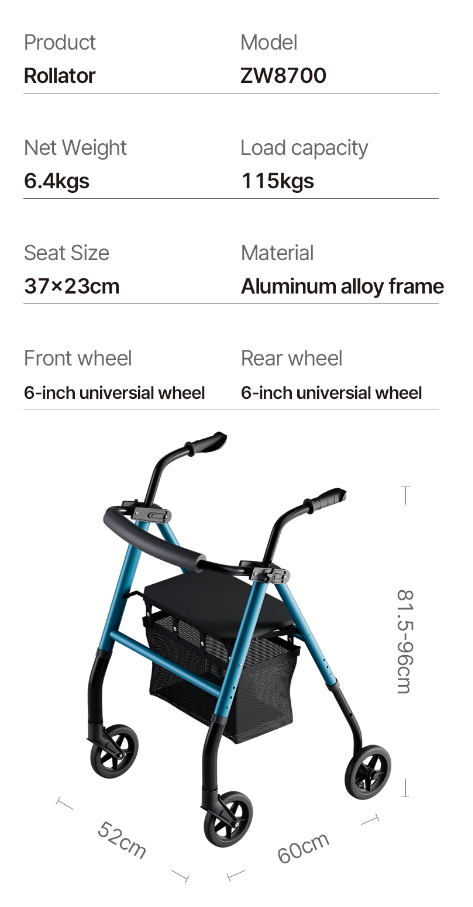
Selecting the right mobility aid is like choosing a reliable partner for your daily life. There is no single “best” option; the ideal choice depends on your specific needs for stability, your desired pace, and your most frequented environments. A rollator walker is an excellent tool for many, but understanding how it compares to other aids is crucial for making an informed decision.
The decision often involves a trade-off between stability and mobility. A standard walker, for instance, offers an exceptionally stable base of support. However, it must be lifted with each step, maximizing stability at the expense of pace. This makes it an excellent choice for indoor use where fall prevention is the top priority.
At the other end of the spectrum, a cane provides the least support but the most freedom, ideal for someone needing minimal balance assistance. A rollator occupies the middle ground, blending substantial support with the freedom to move at a smooth, natural speed.
Post time: Mar-05-2026


