

For individuals seeking greater stability, confidence, and independence in their daily mobility, a rollator walker with a seat is more than just an aid—it’s a gateway to an active lifestyle. Combining support, safety, and convenient rest, this essential mobility device empowers users to navigate their world with reduced fatigue and enhanced security. This comprehensive guide explores everything you need to know about rollator walkers with seats, their benefits, key features, and how to choose the perfect one for your needs.
What is a Rollator Walker with a Seat?
A rollator walker with a seat, often simply called a rollator or wheeled walker, is a four-wheeled mobility aid equipped with handlebars, hand brakes, and a built-in seat and backrest. Unlike traditional front-wheeled or two-wheeled walkers, rollators are designed for users who can walk but need consistent support for balance, endurance, or pain management. The integrated seat allows for immediate rest whenever needed, making it ideal for longer outings, shopping, or social engagements.
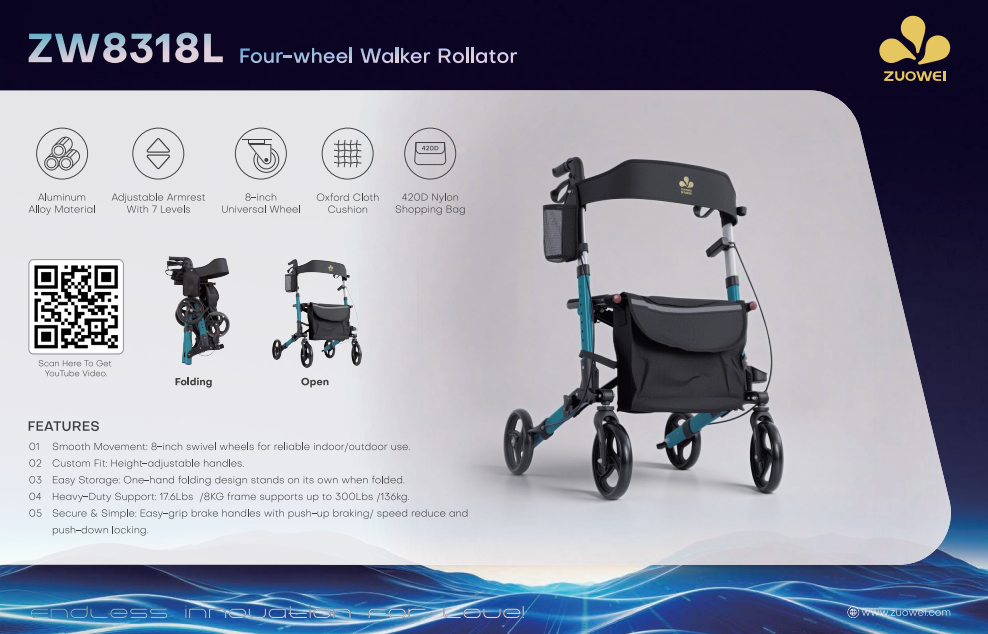
Key Benefits of Using a Seat-Equipped Rollator
• Promotes Independence & Activity:By providing reliable support, rollators encourage users to stay mobile, engage in community activities, and maintain physical fitness without fear of falling or exhaustion.
• On-Demand Rest Station:The built-in seat is its standout feature. It eliminates the search for a bench, allowing users to pause, catch their breath, or simply enjoy the moment safely and comfortably during walks.
• Enhanced Stability & Safety:With four wheels and often synchronized hand-operated brakes, rollators offer superior stability on varied surfaces. The brakes lock the wheels for safe transfers onto the seat and prevent unwanted movement.
• Practical Utility:Many models include a storage basket or under-seat pouch, perfect for carrying personal items, groceries, or medication, freeing up hands for support.
• Improved Posture & Reduced Joint Strain:Properly adjusted handles help maintain an upright posture, reducing strain on the back, shoulders, and wrists compared to standard walkers.
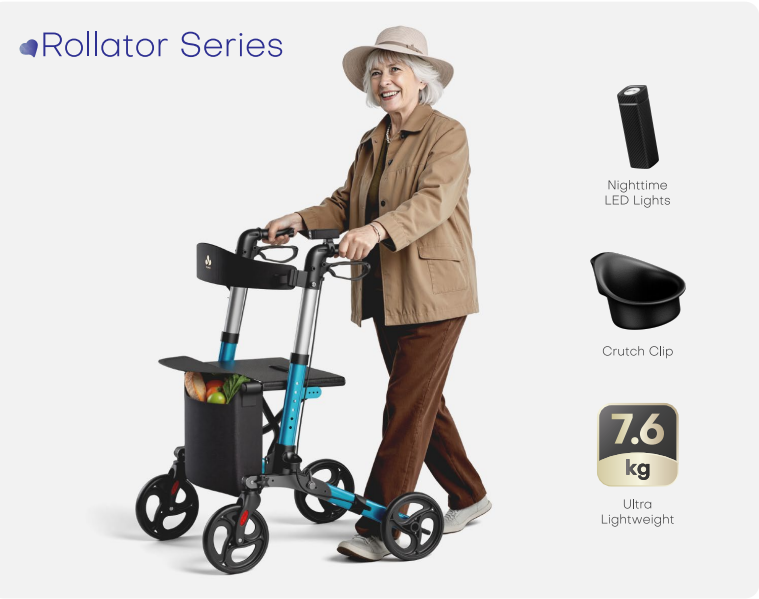
Essential Features to Consider When Choosing Your Rollator
Selecting the right rollator involves assessing individual needs, lifestyle, and physical environment. Here are the critical features to evaluate:
1.Weight Capacity & Durability:Ensure the model supports your weight. Frames are typically made of lightweight aluminum (for easy lifting) or steel (for maximum durability).
2.Wheel Type & Size:
• Large Wheels (8”+):Best for outdoor use—they handle cracks, carpet edges, and rough terrain more easily.
• Small Wheels (6”-8”):Ideal for primarily smooth, indoor surfaces.
• Pneumatic (Air-Filled) Tires:Offer a smoother ride on outdoors but require maintenance.
• Solid/Rubber Tires:Maintenance-free and perfect for indoor use.
3.Seat & Backrest Comfort:Look for a padded, waterproof seat with a sturdy backrest. Some seats flip up to allow closer access to counters or sinks.
4.Braking System:
• Loop-Lock Brakes:Squeeze to slow down; press down to lock. The most common and intuitive system.
• Parking Brakes:Separate levers to lock the wheels securely when stationary.
5.Height Adjustability:Handles should adjust easily to fit your natural standing posture, with elbows at a slight bend (typically 15-30 degrees).
6.Portability & Folding Mechanism:A quick-fold, compact design is crucial for transport and storage. Check the folded dimensions and weight.
7.Accessories:Baskets, trays, oxygen tank holders, and pouches add significant convenience.
Who Can Benefit from a Rollator Walker with a Seat?
This versatile aid is invaluable for a wide range of individuals, including:
Seniors experiencing general weakness, fatigue, or balance issues.
Those recovering from surgery or injury (e.g., hip or knee replacement).
Individuals with arthritis, COPD, multiple sclerosis, Parkinson’s disease, or other conditions affecting stamina and stability.
Anyone who fears falling or feels unsteady during extended walking.
Top Tips for Safe and Effective Use
• Proper Adjustment is Key:Always set the handle height correctly. Your shoulders should be relaxed, and your wrists straight when gripping the handles.
• Use the Brakes:Get accustomed to using the brakesbeforesitting down or standing up. Always lock them during transfers.
• Maintain Good Posture:Walk upright, looking forward, not down at your feet.
• Regular Maintenance:Check tire pressure (if pneumatic), ensure brakes engage properly, and tighten bolts periodically.
• Consult a Professional:An occupational or physical therapist can provide personalized fitting and training for optimal use.
Conclusion: Regain Your Confidence and Freedom
A rollator walker with a seat is a transformative tool that bridges the gap between mobility challenges and an engaged, independent life. It provides the perfect blend of support, security, and practicality, enabling users to participate more fully in daily activities while managing their energy and safety.
Ready to explore your options?We recommend consulting with your healthcare provider to determine if a rollator is right for you. Then, consider your primary environment (indoor vs. outdoor), must-have features, and comfort preferences. Investing in the right rollator walker with a seat is an investment in your autonomy, well-being, and quality of life.
Discover our curated selection of top-rated rollator walkers with seats, compare features, and find the perfect model to support your journey toward confident mobility today.
Post time: Feb-05-2026


